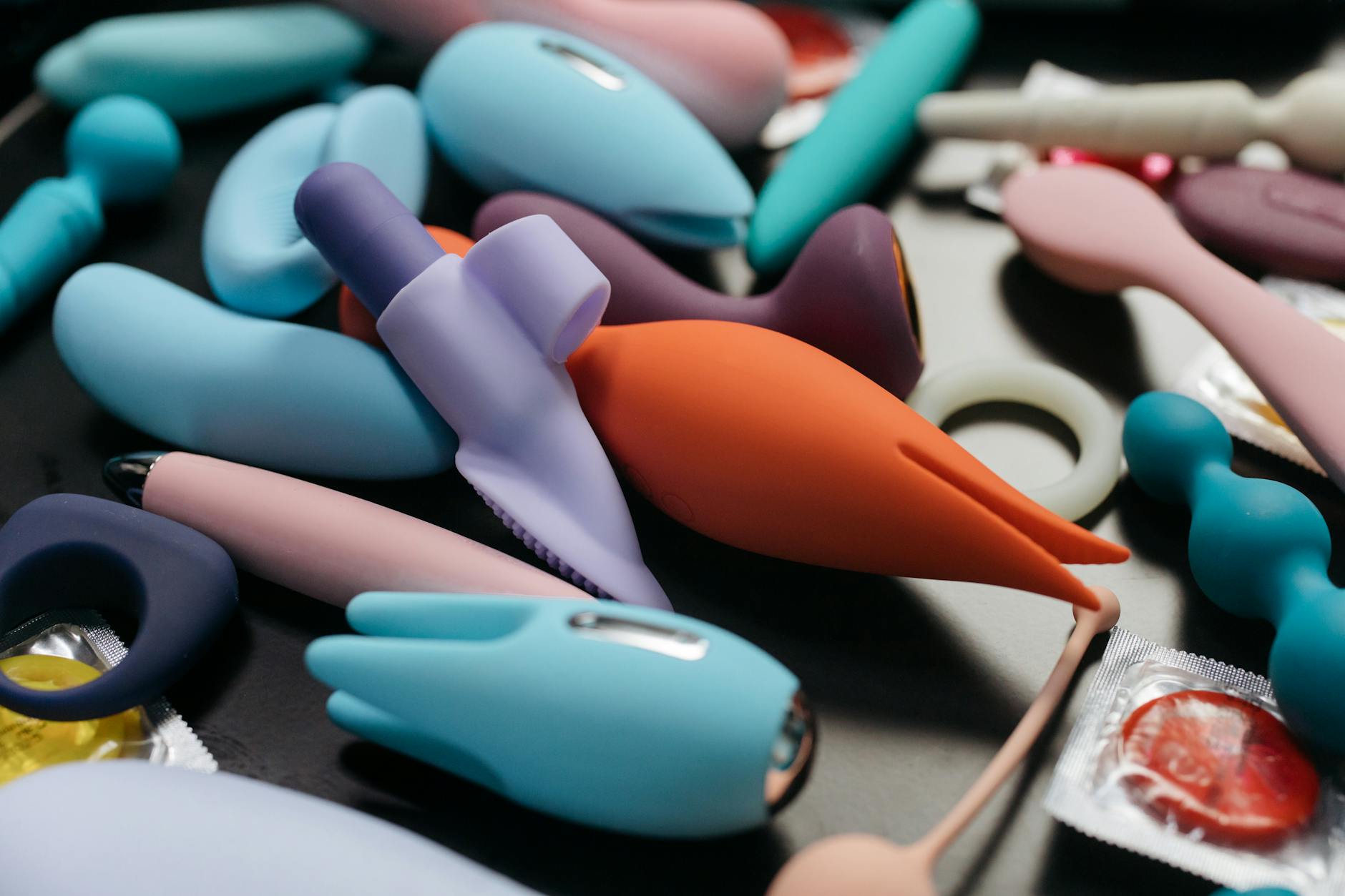
How to Use a Lemon Vibrator When Partners Have Different Arousal Speeds
One partner ready in five minutes, the other needs twenty. A lemon clitoral vibrator isn't a workaround. It's the bridge that lets both of you arrive satisfied.
One of you is ready. The other one isn't. This happens to most couples, and almost nobody talks about it without blame attached. "Why does it always take you so long?" or "I feel like you don't actually want this." Both questions dissolve the actual problem into resentment.
There's actual neurobiology here. Arousal depends on cortisol, dopamine, blood flow response time, genital tissue sensitivity, and mental state. None of those variables are standardized across two bodies. One partner might need quiet focus to get going. The other might be turned on by sound and movement alone.
Stress compounds it. Perimenopause, medication, work pressure, resentment about the last argument. these all shift arousal response time. So does attention. The partner with a busy brain takes longer to land in their body. The partner who's been thinking about sex since lunch is already halfway there.
Here's what makes it worse: we treat slow arousal like a problem to fix, not information to work with. "We need to speed things up" becomes "You're taking too long." That flips a physiological difference into an emotional wound.
Faster partner initiates. Slower partner needs time but doesn't want to hold things up, so they push themselves. This creates performance pressure, which contracts the nervous system, which makes arousal actually slower. Then faster partner feels rejected. Slower partner feels rushed. Sex becomes transactional instead of shared.
Over time, the faster partner stops initiating. The slower partner stops opening up. Both sit in resentment. The sex that does happen is tense.
A clitoral vibrator like the Lemon Clitoral Vibrator breaks this pattern because it separates the two timelines without separating the two people.
Let's say faster partner is ready. Slower partner is at 30 percent. Instead of waiting (which breeds resentment) or rushing (which breeds numbness), slower partner can use a lemon vibrator while you're still connecting.
This works because:
It removes the clock. The faster partner isn't watching the slower one, waiting for readiness. They're both engaged in the moment instead of locked in a race.
It addresses real physiology. A lemon clitoral vibrator creates sustained stimulation that speeds up the arousal response without pressure. The vibration literally increases blood flow and nerve activation. This is not faking it. It's helping your body catch up to your brain.
It shifts the narrative. "Let's use this" is wildly different from "You're too slow." One is collaborative. The other is criticism masquerading as sex.
It gives both partners something to focus on besides the gap. You're not staring at the ceiling waiting. You're present with each other in a different way.
Here's how I guide couples through this in practice:
Start the conversation before sex. Not during sex, when it feels like a hail Mary. "I've noticed our timing feels off sometimes. I want to find something that works for both of us." That's it. No blame. Just data.
Then, during foreplay, slower partner can start with the lemon vibrator at a lower intensity while you're kissing, touching, or just being close. Start at pattern 1 or 2. The goal isn't orgasm yet. It's arousal. You're meeting in the middle.
Faster partner stays engaged. You're not checking your phone or mentally planning breakfast. Touch each other. Kiss. Talk. The vibrator becomes part of the intimacy, not a replacement for it.
As arousal builds, intensity can increase. Some couples find that both partners orgasm closer together when the slower partner uses a lemon vibrator. Some find that the gap stays but it doesn't feel like a problem anymore because they're moving through it together.
My couples often report that using a lemon vibrator actually slowed things down for the faster partner too. Not because the vibrator was a distraction, but because the removal of pressure and rushing made the whole experience less frantic. Turns out rushing isn't sexy. It's just rushing.
Don't wait. Don't have the conversation three minutes before sex. Don't hand over a vibrator with zero context and expect it to fix what's actually a communication problem.
Don't use it to make up for not touching each other. A vibrator amplifies connection. It doesn't replace it.
Don't assume one partner will always be the faster one. Arousal shifts depending on stress, time of month, how much sleep you got, whether you're feeling emotionally close. Flexibility matters more than roles.
Once you introduce a lemon adult toy into this specific situation, something shifts. The slower partner stops feeling defective. The faster partner stops feeling rejected. Suddenly you're a team working on a shared problem instead of opponents in a speed competition.
Couples who've normalized using a lemon vibrator for arousal timing often find their overall sexual satisfaction increases. Not just because the sex itself is better timed, but because they've cracked the code on vulnerability. If you can say "I need help getting ready," you can say anything.
You also learn your own body better. Slower partners often realize they have zero data on what actually turns them on fastest. They've spent so long accommodating they've never explored it. A vibrator becomes a tool for self-discovery, not a crutch.
No. It means you're willing to problem-solve. Most couples have timing mismatches at some point. The ones who stay connected are the ones who address it instead of pretending it doesn't hurt.
Not if you frame it as a team tool. The vibrator isn't a substitute for your hands, your mouth, your presence. It's a way for both of you to arrive at pleasure without one person sitting in discomfort. That's actually deepening the connection, not replacing it.
That's worth exploring. Sometimes one partner is resistant because they're embarrassed, or because they've internalized shame about toys, or because they feel like asking for help is weakness. A conversation with a therapist or counselor can help separate resistance from genuine disinterest. Often it's the former.
Frame it around both of you, not the "problem" partner. "I want us to feel good at the same time" beats "You take too long." You're also not asking for permission. You're proposing a solution. "I'd like to try this" sounds very different from "Do you think maybe we could...?"
Absolutely. Start slow. Lower intensity. No pressure to use it during sex the first time. Some couples just hold it, look at it, get comfortable with it existing in their space. Then they introduce it during foreplay. Then during sex. There's no rush to go from zero to full integration.
Then you've got data. Something about it isn't working for one of you. Could be the intensity, the timing, the context, or the fact that you're not ready yet. Go back to conversation. "What would make this feel better for you?" Maybe it's a different toy. Maybe it's just more time to get used to the idea. Maybe it's professional support to work through whatever's coming up.
You're not trying to sync up perfectly. You're trying to stay connected while your bodies do their own thing. A lemon clitoral vibrator does that. So does communication. So does patience. Together, they transform what feels like a problem into something you're navigating as a team.
Mismatched arousal timing isn't a character flaw. It's just biology doing biology things. The couples who thrive are the ones who stop fighting it and start working with it instead.