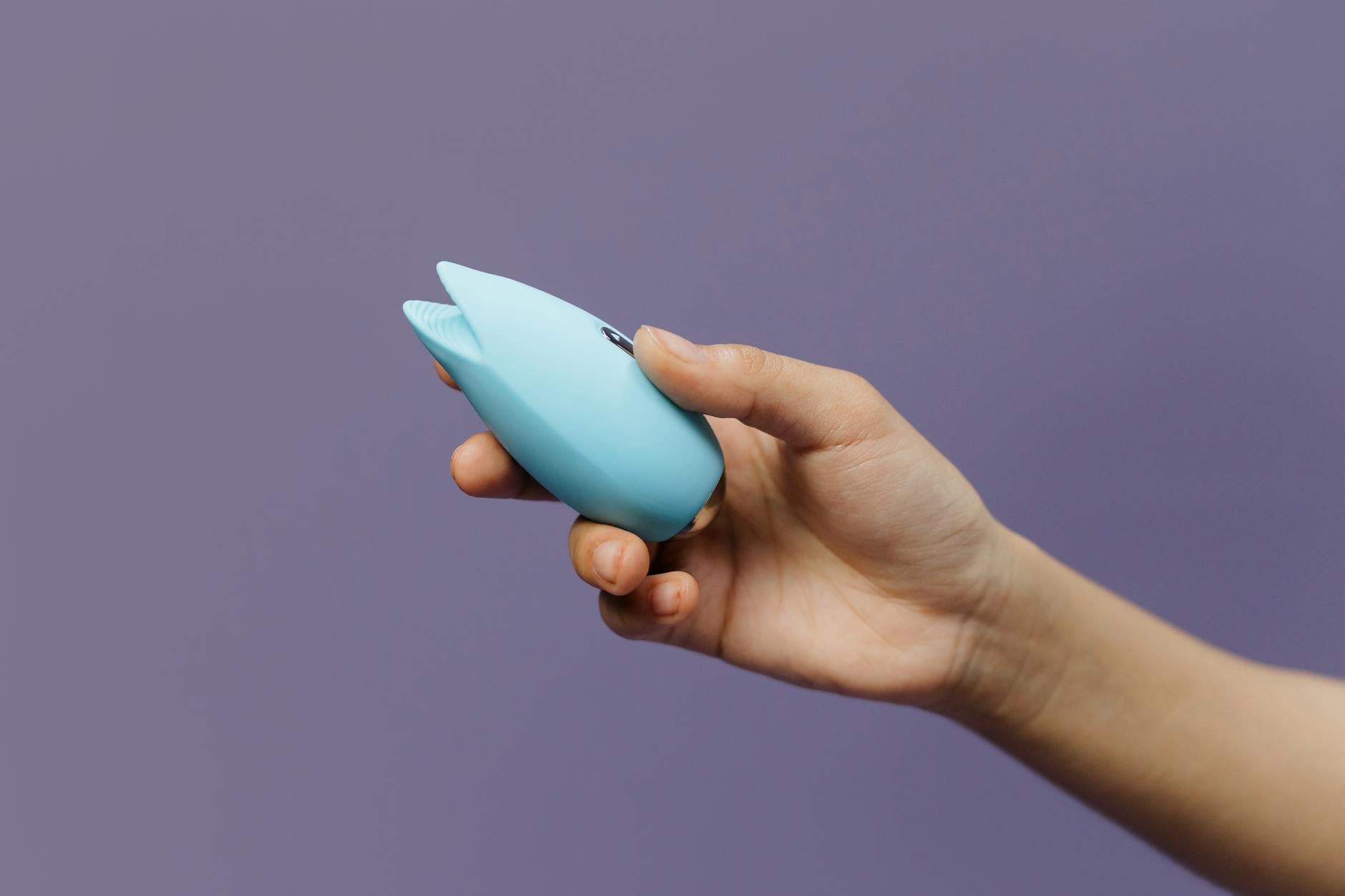
How to Use a Lemon Vibrator to Rebuild Intimacy After Illness or Surgery
Physical recovery isn't the same as emotional reconnection. Here's how to gently restart pleasure when your body feels unfamiliar and trust needs rebuilding.
Illness and surgery are not sexy topics. They're about pain, vulnerability, uncertainty. And then, quietly, they become about something harder: the disconnect between your body and your pleasure. Your body feels like a stranger's. Sex, which once happened without thinking, now requires negotiation with fear, scar tissue, and medical limitations. Many couples I work with describe this as losing something essential before they've had time to grieve it.
Here's what I know after decades of working with couples in recovery: pleasure doesn't have to wait until you're fully healed. But it does have to change shape. The lemon vibrator, with its gentle air-suction technology, is one of the most thoughtful tools I've seen for bridging that gap. Not because it's magic, but because it works with your nervous system instead of against it.
This isn't about "getting back to normal." It's about building something new, slowly, with permission.
The disruption isn't just physical. When you've been cut open, or when your body stopped working the way it should, there's a grief underneath. Anesthesia has worn off but the fear hasn't. Your partner has seen you vulnerable in unfamiliar ways. Medical touch replaced consensual touch. Your nervous system learned to associate your body with clinical coldness instead of warmth.
Additionally, there's often a gap between when your doctor says "you're cleared for sex" and when your nervous system actually feels safe. These are not the same timeline. Your body may be healed while your mind is still in protection mode.
For many people, particularly women recovering from gynecological surgery, there's another layer: the anxiety that something is permanently broken. Will I still be able to orgasm? Will penetration hurt forever? Will my partner still want me? These questions run underneath every attempt at reconnection.
The lemon vibrator addresses this because it removes pressure from penetration entirely. It's external, focused, and doesn't require your body to do anything except receive sensation.
This is the most important step, and I recommend everyone take it, not just those in recovery.
Your body needs to relearn what pleasure feels like without an audience or expectation. Solo exploration is where you can map what's changed, what still works, and what needs time. It's also where your nervous system can gradually shift from "threat" to "safe."
Here's how I suggest starting:
Week one: touch without the vibrator. Lie in a warm bath or on clean sheets. Put your hand on your vulva, your breast, your thighs. Feel the texture of your own skin. Don't aim for arousal. You're just reacquainting yourself. Many people report this alone is enough to loosen something tight.
Week two: low-intensity exploration. If your doctor has cleared you for any kind of genital touch, use the Lem on its lowest setting. Many lemon vibrators have multiple pattern options. Start with the gentlest. Spend 10-15 minutes. You're not chasing orgasm. You're building a conversation with your body.
Week three: adjust intensity. If week two felt okay, try patterns 2-4. Notice what feels soothing versus what feels too much. There's no rush. Some people need two weeks here. Some need two months. The timeline is your nervous system's, not a schedule.
During this time, it's useful to journal three things: Where did you feel sensation? Did your mind wander? If yes, where? Did anything feel like it triggered the memory of pain or fear? This isn't therapy homework. It's just noticing.
Most couples try to restart sex by having sex. Instead, I recommend starting with a conversation that isn't about sex at all.
Say something like: "I'm starting to explore pleasure again on my own, and I want to include you in this somehow. But I need to go slowly. Can we talk about what feels scary and what might feel good?"
This reframes the situation. It's not "when will you be ready for sex." It's "we're rebuilding this together, at a pace that makes sense."
Your partner needs permission, too. They may feel guilty that their desire hasn't paused. They may be terrified of hurting you. They may have built up their own anxiety about your body. A direct conversation about what's changed and what you both need removes the worst part of post-illness intimacy: silence and assumption.
This is different from the solo version. You're reintroducing vulnerability with another person in the room.
I suggest starting with you in control. Sit or lie in a comfortable position where you can hold the lemon vibrator yourself while your partner is beside you, not performing anything. They can touch your hand, your hair, your arm. They can talk or be quiet. The vibrator is yours to guide. Your partner is a presence, not an actor.
Many people say this feels wildly different from traditional partnered sex because the power structure is reversed. You're not receiving; you're leading. Your partner is supporting, not directing. This shift alone, early in recovery, can recalibrate a lot.
This is where I see couples get stuck. There's pressure, conscious or not, to "get back to normal" sex. Normal, in most relationships, involves some form of penetration. The lemon vibrator can feel like a detour instead of a destination.
Let me be clear: clitoral pleasure is not a warmup. It's not foreplay. It's complete in itself. After surgery or illness, particularly if you've had trauma around your body, this distinction matters. When you and your partner can sit with the fact that pleasure doesn't require penetration, something shifts. The pressure lifts. The lemon vibrator stops being a tool and becomes an option.
If and when penetration feels possible, that's a different conversation. But it doesn't have to be part of the same recovery journey. I've worked with couples where clitoral pleasure remained the center of their intimate life post-recovery. That wasn't failure. That was honesty.
Here's something that surprises people: sometimes pleasure brings tears. Sometimes it brings anger. The body holds memory, and reconnecting with pleasure can trigger the memory of pain or disconnection.
If this happens, it's not a sign that you're doing it wrong. It's a sign that something is moving. Tell your partner. "I need to stop. Not because something hurt, but because something came up emotionally." That sentence is enough. Then rest. The nervous system is doing its work.
Some people find it useful to pair the lemon vibrator with grounding techniques. As you use it, name five things you can see, four you can feel, three you can hear. This keeps your brain in the present moment instead of in the memory of being ill or vulnerable.
Many people expect desire to come roaring back once their body is healed. It usually doesn't. Desire is built, not switched on. And it's built through small repeated experiences of safety and pleasure.
This is where consistency matters more than intensity. Using the lemon vibrator twice a week, for 15 minutes, with no expectation of orgasm, builds desire faster than a single focused session aimed at climax. You're training your nervous system to associate your body with something good. That takes time.
I often tell my clients: desire is what follows belonging. When you belong to your body again, and your partner belongs in this new version of it, desire follows naturally. The vibrator is just a tool for that belonging.
If penetration causes pain beyond normal muscle tension, or if you've had surgery that specifically affects sexual function, a pelvic floor physical therapist is invaluable. They can assess what's healed and what still needs work. Some people benefit from therapy, too. A therapist who specializes in sexual health or medical trauma can help process the emotional residue.
Your doctor is also a resource. If you're cleared for sexual activity but not sure what that means for your specific recovery, ask. The conversation is awkward for about 30 seconds and then it's useful.
That depends entirely on your surgery. If you had abdominal surgery unrelated to your reproductive system, external vibrator use might be fine much sooner than penetration. If you had gynecological surgery, follow your doctor's guidance on when genital touch is safe. Generally, most gynecologists clear external clitoral stimulation before penetration. Ask yours specifically.
Yes, and that's normal. Your nerve pathways are still settling. Your muscles are still relearning. The sensations may feel softer, or sharper, or entirely different. This usually shifts over months as recovery deepens. It's not permanent, though some people find their new orgasm pattern is actually better than before.
Many partners worry that a vibrator means they're not enough, especially when things already feel fragile. Have the conversation directly: "I'm using this to rebuild a connection with my own body. It's about me and healing, not about you or our relationship." Invite them to read about how the lemon vibrator works. Sometimes understanding the tool removes the threat.
Completely normal. Post-illness or post-surgery, your body's ability to sense pleasure can be muted. You might feel pressure or vibration but not arousal. That's not broken. It's just temporary. Keep using the tool in low-intensity sessions. Sensation usually returns in 4-8 weeks of consistent gentle use.
Absolutely. Use water-based lube generously. If you've had surgery in that area, lube isn't optional; it's kind. Scan your surgical clearance to make sure you're not using anything that might irritate healing tissue, but generally, water-based is safe immediately post-clearance.
Stop. Rest. Your body is telling you something. It might be that you're not ready yet. It might be that the intensity of sensation triggered fear. There's no deadline. Dial back to lower patterns next time. Orgasm will still be available when your nervous system feels safer.
Recovery isn't linear. Some weeks you'll feel more connected to your body. Some weeks you'll feel like you're back at the start. This is normal. Your nervous system has been through something. It's learning that your body is safe again. That takes longer than the physical healing.
What I've seen, over and over, is that couples who use this time to slow down, communicate, and rebuild pleasure without pressure end up with something stronger than they had before. Not because the illness or surgery was good. But because they stopped taking pleasure for granted. They were forced to be intentional. And that intentionality often carries forward.
Your lemon vibrator isn't a replacement for your body's own capacity for pleasure. It's a bridge. Use it gently. Use it with curiosity. Use it knowing that reconnection is possible, even when your body feels unfamiliar. Especially then.