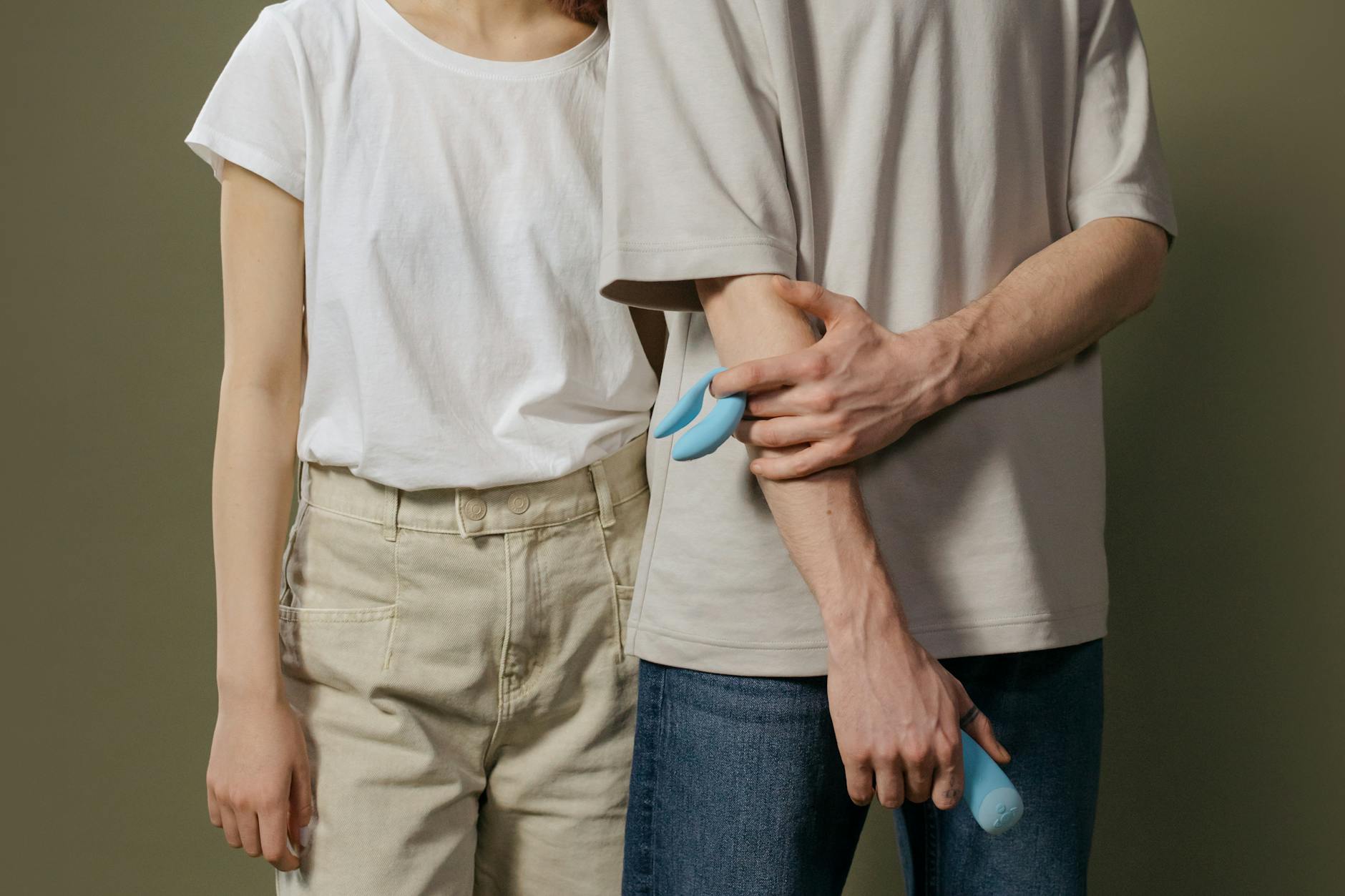
How to Use a Lemon Vibrator When You Have Anxiety or Performance Pressure
Anxiety kills arousal faster than anything else. Here's how lemon vibrators and simple nervous-system work break the cycle and let you feel good again.
Performance anxiety kills arousal. Not because your body's broken. Not because you're damaged goods. But because anxiety lives in the same nervous system as pleasure, and when one fires up, the other goes offline. Your brain is too busy scanning for "am I doing this right" to actually feel anything at all.
And here's the thing nobody talks about: anxiety isn't always about your partner. Sometimes it's about you. You've internalized some narrative about how sex "should" feel, or how quickly you "should" orgasm, or whether your body is "normal" enough. That internal pressure is just as paralyzing as external judgment.
Lemon vibrators, specifically, help break this cycle. Not because they're magic. Because they work differently than other toys, and that difference matters when your nervous system is already wound tight.
Here's the neurology. Your nervous system has two main gears: sympathetic (fight-or-flight) and parasympathetic (rest-and-digest). Arousal lives in the parasympathetic gear. Anxiety lives in sympathetic.
When you're anxious, your body prioritizes threat assessment over pleasure. Blood stays in your core and extremities, ready to run. Your pelvic floor tightens. Lubrication slows. Your skin gets less sensitive. Everything your body needs to feel good shuts down to conserve resources for survival.
Most traditional vibrators require you to do cognitive work too. You're thinking about angle, pressure, rhythm, whether you're "getting there" fast enough. That thinking keeps your sympathetic nervous system firing.
A lemon clitoral vibrator works through suction and pulsation, not direct buzzing. That changes three things for anxious bodies.
First, it requires less mental management. You don't adjust angle micro-millimeter by micro-millimeter. You don't calculate pressure. The suction creates a seal and does the work. That's fewer micro-decisions, which means less cognitive load, which means your prefrontal cortex can actually relax.
Second, the sensation is diffuse, not pointed. Traditional vibrators concentrate stimulation on a tiny area. That concentration actually heightens sensory awareness in an anxious way. It's like being hypervigilant about your own pleasure. Suction spreads the stimulation across a larger tissue area. It feels less like scrutiny and more like immersion.
Third, it creates rhythmic consistency. Anxiety hates unpredictability. A lemon vibrator's pulsation pattern is stable and predictable. Your nervous system recognizes that stability and stops bracing for surprises. You can exhale.
You can have the best lemon vibrator in the world, but if your nervous system is still in fight-or-flight, it won't matter. So the real work happens before you touch anything.
Try this: ten minutes before you plan to use any toy, do something that signals safety to your body. Not meditation (if that makes you anxious, skip it). I mean:
Take a warm shower. Hot water literally lowers your core temperature and signals relaxation. Your nervous system responds to that signal within minutes.
Do some gentle movement. Five minutes of yoga, stretching, or dancing to a song you love. Movement metabolizes cortisol and sends parasympathetic signals. It doesn't have to be intense.
Skin-to-skin contact with a partner, if you have one. Thirty seconds of hugging triggers oxytocin release. That's neurochemistry working for you.
Or just sit quietly with your hand on your heart and feel it beating. Seriously. That self-soothing gesture is hardwired to calm your nervous system.
The point: you're not warming up for sex. You're signaling to your body that it's safe to feel good.
Start on the lowest setting. Most lemon vibrators have multiple intensity levels. When anxiety is high, your threshold for overstimulation is lower. Pattern 1 or 2 is your friend.
Use plenty of water-based lubricant. Anxiety makes natural lubrication harder. Adding lube removes friction, which removes a potential source of discomfort, which removes a reason for your nervous system to stay vigilant.
Focus on breath, not sensation. This sounds counterintuitive, but when you're anxious, trying to "focus on the feeling" often just means you're focusing on whether you're feeling right. Instead, put your attention on your exhale. Long, slow exhales trigger the parasympathetic nervous system. Your pleasure will follow.
Give yourself permission to stop. Seriously. You can use the toy for two minutes and be done. You can use it for twenty. You can use it and not orgasm at all and still consider it a win because your nervous system stayed regulated. Removing the expectation of outcome is half the battle.
Sometimes the pressure isn't internal. Sometimes it's "my partner expects me to orgasm in ten minutes" or "I feel like I'm taking too long" or "what if I look weird right now."
That's a different problem, and a lemon vibrator alone won't solve it. But it can help you reframe the conversation.
Using a toy with a partner is actually a way to take performance pressure off. You're not relying solely on their touch or rhythm. You're not worried about them getting tired. You have agency. You're directing the show.
If you're feeling self-conscious, start solo first. Get comfortable with the toy's rhythm and your body's response. Then when you bring it into partnered time, you're not learning two things at once. You already know it feels good. Now you're just sharing something good with someone you trust.
If your partner is putting pressure on you, that's relationship territory. A toy won't fix that. A conversation will. You might find how to talk to your partner about using lemon vibrators helpful for framing that discussion.
If you're on SSRIs or SNRIs, you might notice that pleasure feels harder overall. That's real. These meds are incredibly effective for anxiety, but some of them do dampen sensation temporarily.
Lemon vibrators actually help here too, because the suction sensation is so different from what you'd normally feel that it can cut through some of that dampening. It's not a cure, but it's often a useful workaround. If sexual side effects are severe, talk to your prescriber about timing your dose or adjusting your med. Don't just suffer in silence.
Anxiety doesn't disappear because you used a toy once. But repeatedly experiencing pleasure in a regulated, pressure-free way actually retrains your nervous system. Each time you use a lemon vibrator and feel good without performing, your body learns that pleasure is safe. That anxiety-arousal conflict gets a little quieter.
Over weeks and months, you might notice that regular anxiety also triggers less easily. That's not the toy doing that. That's your nervous system learning through repetition that it's safe to relax. The toy is just the vehicle.
Yes. SSRIs, SNRIs, and other anxiety meds don't prevent pleasure or toy use. They might dampen sensation slightly, but lemon vibrators' unique suction sensation often cuts through that. If sexual side effects are severe, talk to your doctor about dose timing or alternatives. Don't stop your medication to feel pleasure. That's the wrong trade.
Stop. Seriously. There's no prize for pushing through panic. Put the toy down, take some deep breaths, and do something grounding. Touch something with a strong texture. Name five things you can see. Get back into your body on your terms. You can try again tomorrow. Your nervous system needs to learn that you listen to it, not that you override it.
Yes, if anxiety is very high. Dissociation is your nervous system's ultimate defense mechanism. In that case, the toy might not be the solution right now. Grounding work, maybe talk therapy, possibly adjusting anxiety meds if they're numbing you. Once your baseline anxiety comes down, pleasure becomes accessible again. See how to use a lemon vibrator if you hate the feeling of numbness for more specific strategies.
Maybe. It depends on whether you trust them and whether the pressure is coming from them or from inside you. If the pressure is internal, partner involvement might actually add a layer of "they're watching, they're judging." Solo first, then together once you're more confident. If the pressure is coming from your partner, a toy won't fix that dynamic. The relationship conversation comes first.
That depends on your baseline anxiety and what's driving it. If it's situational anxiety about a new partner, a few weeks of pressure-free solo or partnered play might shift it. If it's chronic anxiety, you're retraining your nervous system, which takes months. Be patient with yourself. Pleasure under pressure isn't pleasure. Pleasure without pressure, even if it takes longer to arrive, is actually worth having.
Not necessarily. What matters is consistency and pressure-free experience, not frequency. Three times a week of relaxed, no-goal-in-mind play is better than daily sessions where you're anxiously checking whether it "worked." Quality over quantity. Your nervous system responds to repetition of the experience of safety, not to repetition of the activity itself.
Anxiety and arousal can't coexist. Your nervous system isn't broken for having anxiety. But you can use tools like a lemon vibrator, along with nervous-system work, to create conditions where pleasure becomes possible again. That's not about forcing yourself to feel good. That's about removing the obstacles so feeling good can happen naturally.