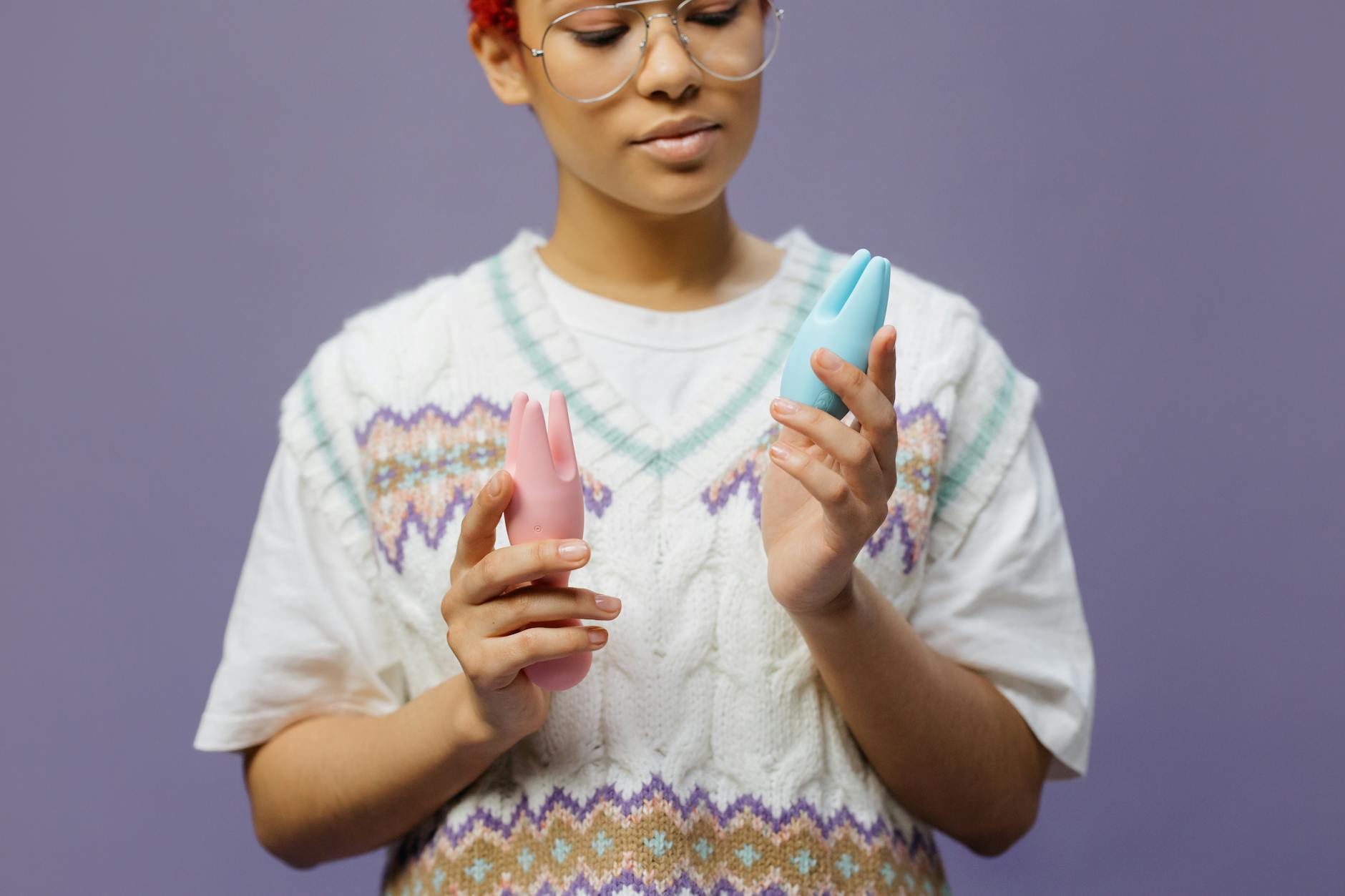
Here's what most couples won't admit: the first time your partner asks to watch you use a lemon vibrator, there's a moment. Not arousal. Not excitement. A moment of—okay, how do I do this without feeling completely exposed?
That moment is normal. It's not a sign you're not ready or that your relationship is broken. It's just the gap between fantasy and reality, and it's navigable if you know how.
When you're together, there's a rhythm. A shared focus. An implied permission structure: we're both here, we're both present, we're both consenting to what happens next. Solo pleasure in front of a partner flips the power dynamic. You're exposed. You're being watched. And unlike partnered sex, there's no one else performing—it's all you.
That matters neurologically. Your brain registers it differently. And because lemon vibrators—clitoral vibrators like The Lem—create very direct, specific sensations, there's nowhere to hide. You're not distributing attention between yourself and your partner. You're fully visible, fully focused, fully in your own body.
This is actually the good part. But it has to be approached deliberately.
I've worked with dozens of couples on this, and the ones who succeed have one thing in common: they talk it through first, not just assume it'll happen naturally.
Here's what that conversation needs to cover:
Why your partner wants to watch. Are they curious about what turns you on? Do they want to understand your body better? Are they experiencing their own arousal from the thought? Do they want to feel closer? These aren't the same question, and they matter. Ask without judgment. Listen without defensiveness.
What you're comfortable with. Can you imagine doing this? What part feels accessible and what part feels like a hard no? Be specific. "I don't want to do this" is fine. So is "I'm nervous but curious." Both are data your partner needs.
The logistics. Where would this happen? Lights on or dim? Will your partner participate, or purely observe? What does "stop" look like if you need it? These aren't romantic questions, but they're essential ones.
What happens after. Will you want to talk about it? Will you want physical affection? Will you need space? Aftercare isn't just for intense scenes. It's for any time you've been vulnerable in a new way.
If you've decided to try this, most people don't go from "we talked about it" to "performance ready" overnight. There's a middle ground.
Stage one is solo practice. Use your lemon vibrator alone first—or again if you've used one before. Remember what you like. Remember what your body feels like. Get grounded in your own pleasure before anyone else is in the room. This isn't about perfecting a show. It's about reminding yourself that this is for you.
Stage two is proximity without observation. Your partner is nearby, maybe in the same room but not actively watching. Reading, scrolling, present but not focused. This takes the pressure of "performance" off while you adjust to not being alone.
Stage three is soft watching. Your partner is present and aware, but the framing is different. You're not performing. You're inviting them into something that's already happening. The shift in language alone changes the dynamic. "Do you want to watch me?" feels very different from "I'm going to put on a show for you."
A few things I hear repeatedly from people who've made this work:
Wear what makes you feel good. Not what you think your partner wants to see. Some people feel more comfortable fully dressed. Some want to undress slowly. Some want lingerie. Some want nothing but their skin. The research on arousal is clear: comfort increases pleasure. Full stop.
Use the vibrator the way you actually use it. Not faster, not harder, not at angles that feel "performed." If you usually take 20 minutes, take 20 minutes. If you usually use The Lem on your clitoris for a few minutes and then switch to something else, do that. Your partner watching doesn't change what your body needs. Let it.
Maintain focus on yourself, not your partner. This is the hard part. There's a temptation to watch your partner watching you, to gauge their reaction, to adjust based on what you think they're feeling. Resist that. Come back to sensation. Come back to your body. Your pleasure is the point. Their presence is secondary.
Communicate non-verbally if verbal feels too much. You don't have to narrate. You don't have to perform dialogue. A hand gesture that means "keep watching" or "give me a minute" is enough. Some couples use a simple system: thumbs up means good, flat hand means pause, shake of the head means stop. Find what fits.
Once you've gotten comfortable with observation, it often naturally evolves. Maybe your partner touches themselves. Maybe they move closer. Maybe they touch you. Or maybe it stays exactly as it is—one person with the vibrator, one person watching—and that's the whole thing.
All of those are okay.
The couples I've worked with who report the most satisfaction say the same thing: the vulnerability itself became the turn-on. Not the vibrator, not the watching, but the radical honesty of it. I'm here. I'm present. I'm showing you exactly what feels good to my body. And you're choosing to witness that.
That's intimate in a way that's hard to describe until you've experienced it.
Performing instead of feeling. The moment you shift into "putting on a show," pleasure usually drops. Your nervous system knows the difference between authentic arousal and performance arousal. So does your partner.
Assuming silence means approval. Check in. Not every time—that would kill the mood—but maybe afterward. "How was that for you?" is a fair question. So is "I felt weirdly exposed. Let's try something different next time."
Rushing the comfort-building stages. If you're still nervous and your partner starts expecting this regularly, resentment builds fast. Take your time. There's no timeline on intimacy.
Letting it become obligatory. This works as occasional shared pleasure. It doesn't work if it becomes expected every time you have sex, or if one partner is doing it to keep the other happy. That's transactional, and transactional sex doesn't sustain.
The couples who come back to me months later and say this changed their relationship often tell me the same story: once I let him see me like that, everything shifted. I stopped hiding. He stopped wondering. We both knew exactly what we were working with.
That's the real benefit. Not the novelty, not the visual stimulation, but the removal of mystery. You both know what your body feels like, what turns you on, what you need. That information is powerful. It's the foundation of better sex, better communication, better intimacy overall.
If you decide this is for you, start small. Start honest. And remember: your pleasure isn't the entertainment. It's the point. Your partner gets to be there for it. That's the gift.
Then you don't do it again. Trying something once and deciding it's not for you isn't failure. It's information. Many couples find that specific combinations of vulnerability and observation work better than others—maybe you're fine with them watching, but you'd rather they participate. Maybe you need the lights much dimmer. Maybe you need to do it less frequently. There's no one right way.
Absolutely. Some partners enjoy using a vibrator on their partner while the other partner also uses one. The Lem and other clitoral vibrators work well for partnered use. The conversation about comfort and boundaries stays the same—it just extends to include mutual touch and sensation.
You don't have to do it. Ever. This isn't a standard relationship expectation, and your comfort matters more than their curiosity. If this is important to them and it's genuinely off the table for you, that's a compatibility issue worth addressing with a couples therapist—not a personal failure.
No. Exploring new forms of intimacy doesn't mean the old ones were wrong. Some couples have full, satisfying sex lives and never do this. Others add it as one piece of a broader landscape. Neither is better. It's just different.
Comfort usually feels like curiosity mixed with some nervousness. Discomfort feels like dread, or a strong internal "no." Nervousness is normal and workable. Dread is a sign to pause. Talk to your partner. If you're not sure, start with the early stages and see how you feel. You can always stop.
Yes. Clitoral vibrators like The Lem focus stimulation on external tissue, which avoids the areas that might be painful. If you have vulvodynia, endometriosis, or other conditions that make penetration difficult, external vibration is often a good option. Start with lower intensities and see what your body tells you. If pain appears, that's data—share it with your partner and adjust.
Vulnerability in front of a partner is legitimate exposure. Your body is being witnessed. Your pleasure is being observed. That's a big thing. Treating it like a big thing—talking through it, taking your time, checking in—isn't overthinking it. It's respect, for yourself and for your partner.
If this becomes part of your intimate life, great. If you try it once and never again, that's fine too. The point is that you choose it together, fully informed and fully honest. That's what turns exposure into intimacy.