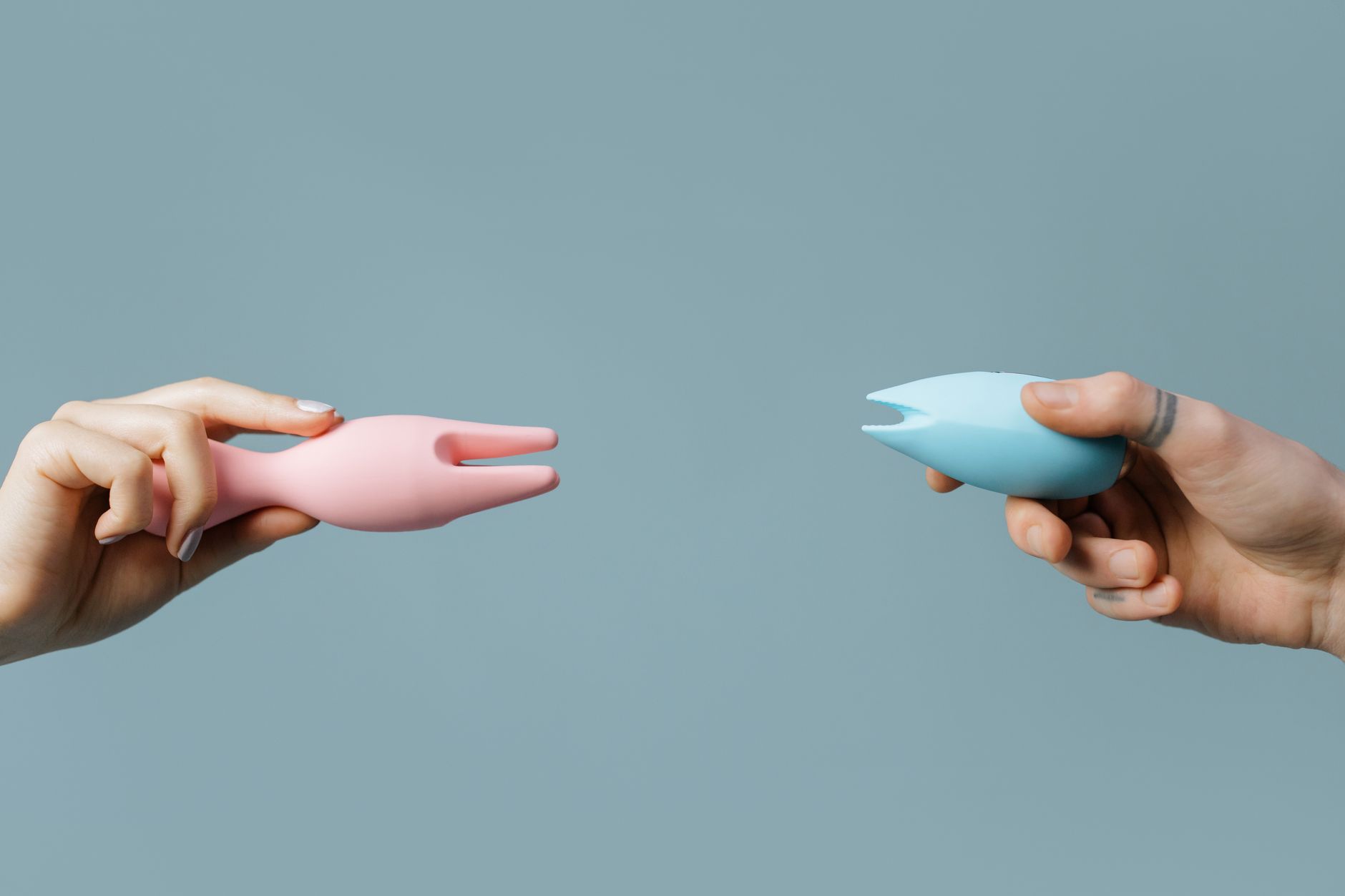
Arousal slowdown is real, it's common, and it's not a sign that something's wrong with you or your relationship. What shifts is the timeline. Twenty minutes of touch used to land you at full arousal. Now it takes thirty-five. Or forty. This isn't dysfunction. This is a different body with different pacing.
The problem isn't the slowness. The problem is that we're culturally trained to treat arousal like an on-off switch when it's actually more like a dimmer. When you're expecting a flick and getting a gradual fade, frustration arrives before pleasure does.
Lemon vibrators work brilliantly here because they compress the warm-up without skipping it. You still get the build. It just happens faster and with more certainty.
Three main culprits operate independently, which means they can stack on top of each other.
Hormonal shifts. Estrogen, testosterone, and progesterone all influence how quickly blood flows to the genitals and how sensitive nerve endings respond to touch. This changes across the lifespan and fluctuates with stress, sleep, medication, and cycles if you menstruate.
Psychological load. Stress, relationship friction, work pressure, and distraction literally reduce blood flow to the genitals. Your nervous system can't relax into arousal when part of your brain is working through tomorrow's presentation. This one's fixable with actual presence, not willpower.
Insufficient warm-up time. The biggest culprit nobody talks about. We've normalized the idea that arousal should happen instantly, which means most people never give themselves the actual time their body needs. When you do, things shift fast.
Instead of chasing speed, build in stages. This sounds longer, but it's actually more efficient because each stage builds on the last without wasting energy on things that aren't working.
Stage one: Mental transition (5-10 minutes). This is not foreplay. This is you shifting from "I should probably do this" to "I actually want this." Put the phone down. Close work tabs. Light a candle if that helps signal to your brain that something's different now. If you're with a partner, this might be talking, laughing, or just being close without touching. The goal is to move out of your head.
Stage two: Non-genital touch (10-15 minutes). Skin contact that isn't aimed at getting you off. Neck, shoulders, inner arms, behind ears. The goal is increased blood flow and nerve activation without the pressure of "am I turned on yet?" This is where a lot of people cut corners. Don't. Your whole body is an erogenous zone if you treat it like one.
Stage three: Direct touch, no device (5-10 minutes). Manual stimulation or partner touch to the genitals, but slow and exploratory. Notice what feels good today, because it might be different than last week. Some people need light touch here. Others need more pressure. Pay attention instead of defaulting.
Stage four: Introducing the lemon vibrator (10-15 minutes onward). This is where lemon clitoral vibrators shine. At this point, your body is already partially aroused and your nervous system is oriented toward pleasure. The vibrator doesn't have to do all the work. It just amplifies what's already happening.
Speed setting matters here. A lot of people jump to the highest intensity, thinking more power equals faster results. It doesn't. It usually just feels overwhelming.
Start at level one or two on the Lem vibrator. Your body's already warm. What you need is sustained, consistent stimulation, not maximum force. Let the pattern work for thirty seconds to a minute before adjusting. Most people find that pattern three (the pulsing rhythm) works better than constant vibration when arousal is building slowly. The rhythm mimics natural arousal better than a flat hum.
Don't isolate the vibrator to one spot. Move it slightly. Vary pressure. Some moments light, some moments firmer. This variation keeps your nervous system engaged instead of adapting to a single sensation.
The goal is not to rush to orgasm. The goal is to deepen arousal. Orgasm might come later, or it might not. That's fine. What matters is the pleasure building in your body.
One of the biggest mistakes couples make when arousal slows is scheduling sex the same way they always did.
If you used to have sex at 10 p.m. and it worked fine, and now 10 p.m. timing isn't working, move it earlier. 8 p.m. or even before dinner. You'll have more energy and less accumulated stress from the day. This sounds obvious but almost nobody does it.
Second, front-load pleasure into the day. Text your partner something that makes you think about them. Notice attraction. Let anticipation build before clothes come off. This mental priming makes the physical warm-up stage much shorter because part of the work is already done.
Third, give yourself permission to build arousal on different days. If you know you need thirty minutes and you only have fifteen, don't force it. Do the first two stages, stop, and come back later. Your body remembers that you started the process. The next session builds faster.
This is where couples run into real friction. One person is ready in five minutes. The other needs twenty-five. The five-minute person feels rejected. The twenty-five-minute person feels rushed.
The lemon vibrator solves this by letting the slower person access pleasure independently while the faster person is also present. You're not waiting for synchronization that might never happen.
Here's the conversation: "My body needs more time to warm up. I'm not rejecting you. I'm asking for the chance to enjoy this without pressure." Then show them. Use the vibrator while they touch you elsewhere. Let them see that you're engaged and building pleasure on your timeline.
If you're on antidepressants, hormonal birth control, or managing a thyroid condition, arousal slowdown might not be behavioral. It might be physiological.
Before assuming you need to work harder, talk to your doctor. Sometimes a dose adjustment or switching medications helps. Sometimes adding a second medication addresses the side effect directly. This is worth exploring, especially if slowdown appeared suddenly after starting something new.
If you're in perimenopause or menopause, the slowdown is almost certainly hormonal. Topical estrogen, testosterone therapy, or even just strategic lube can make a real difference. Some people find that lemon clitoral vibrators work better after treatment because the tissues respond more quickly to stimulation.
Performance anxiety. Thinking "I'm taking too long" or "They're getting bored" is like trying to relax while someone's timing you. It doesn't work.
The fix is explicit conversation. "I'm going to take some time to warm up. That's normal for my body right now. I don't need you to do anything except be here." Or if you're using a lemon vibrator solo, no judgment, no rush. Just pleasure at your own pace.
Consent, presence, and patience matter more than any technique. The vibrator is just a tool that makes the pleasure more reliable while you're taking the time you actually need.
Multiple factors converge around midlife. Hormonal shifts start gradually. Stress and life demands often peak. Sleep quality typically drops. You might have less novelty in your relationship, which requires more active engagement. It's not one thing. It's a combination. The good news: when you address the actual causes (sleep, stress, intentional partner connection), arousal often speeds up noticeably.
Not slower, but sometimes it can short-circuit the warm-up if you jump straight to intense stimulation. Your body doesn't finish the natural arousal cascade. Try starting with the vibrator at lower settings after you've already spent time on touch and presence. The vibrator amplifies what's already building, rather than initiating from zero.
Sometimes, but usually not. Slower arousal is way more often about hormones, stress, sleep, or just needing different types of stimulation than you did before. If attraction truly faded, you'd notice it in other contexts too. not just sex. If it's only the physical arousal that's slower, focus there.
There's no "should." Anywhere from ten to sixty minutes is normal depending on your body, your stress level, your relationship, and your cycle if you menstruate. Stop comparing your warm-up time to what it used to be. Compare it to what works now.
Lem vibrators and other clitoral suction devices work particularly well here because they provide consistent, broad-based stimulation without requiring as much manual input. The suction pattern mimics oral sex, which many people find easier to relax into than direct vibration. Other vibrators work fine. The clitoral suction approach just happens to be especially reliable for people who need a longer warm-up.
That's a relationship conversation, not a sex technique problem. You might say: "My body's timeline is my body's reality. I want to enjoy this instead of rush it. Can we make time for that?" If they can't, that's information. If they can, build it into how you approach intimacy together. A lemon vibrator can help make the extended warm-up feel more interactive for both of you instead of one person waiting.
Slower arousal stops being a problem the moment you stop treating it like one. When you give yourself actual time, strategic touch, and the right tools, arousal builds reliably. The Lem vibrator fits into this perfectly because it's consistent, it's powerful enough to work when you're partially aroused, and it doesn't require you to think about technique while you're building pleasure.